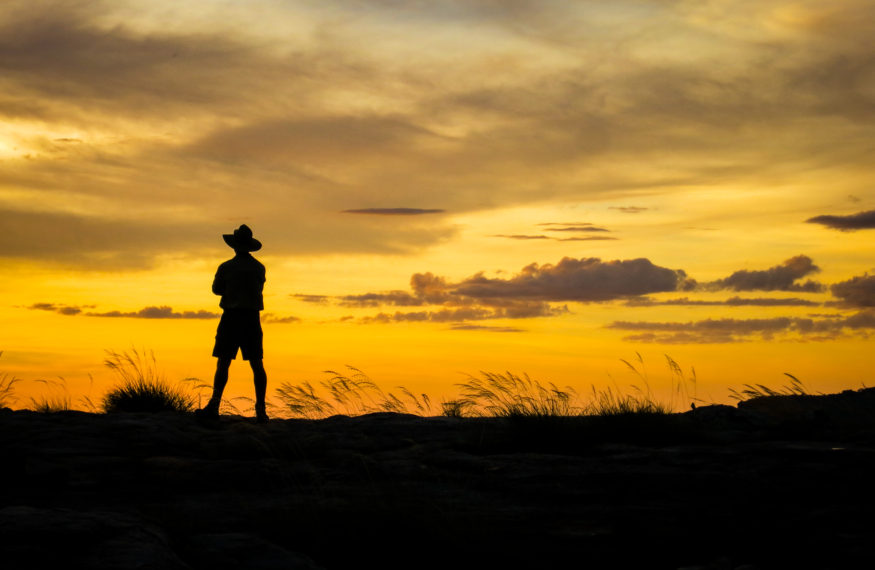
Kakadu, Australia
Why did we come to Australia? If we had to choose one reason, we’d say The Outback. Sure, this country has gorgeous beaches, ancient forests, and world-class cities, but this wild landscape and its cultural identity are so uniquely Australian that you can’t find them anywhere else in the world. The Outback, by definition, is the vast, remote, rugged, and largely impassable interior of the country. When we asked a local about bus options between Daintree and Darwin, they literally laughed in our face. “Nothing but the ‘road-trains’ do that route and, trust us, you don’t want to try.”
There would be no leisurely self-guided road trip through the Outback; we had to pick one section and call in the pros. We flew from Cairns to Darwin, the capital of the “Top End,” and joined Adventure Tours’ 3-Day Kakadu and Katherine Safari to explore this UNESCO World Heritage area with its unreal landscapes and oldest living culture in the world.
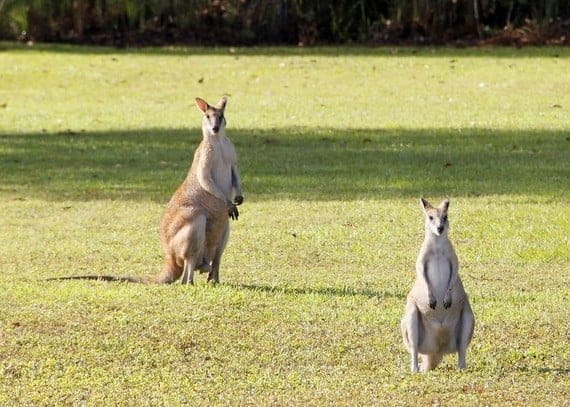
As soon as we left Darwin with our small group tour (as in one other guest and our awesome guide Luke), the wildlife sightings began. We even saw wallabies while filling up at the gas station; they are everywhere!
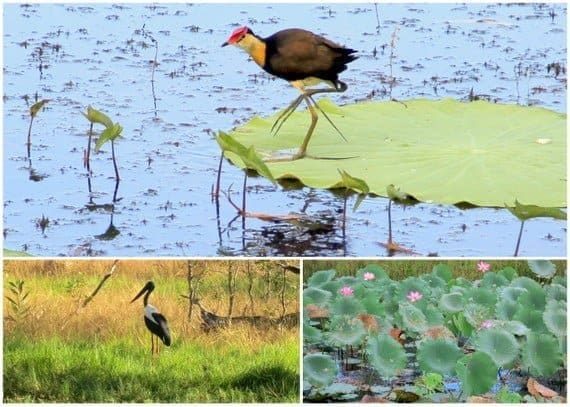
The Top End Outback is actually not as arid as you’d think; it’s monsoonal with tropical qualities since it is so close to the equator and the coast. We arrived at Mary River National Park, and it was covered with lotus flowers, surrounded by wattle trees and exotic birds. The area is particularly known for birdwatching and its abundance of water pythons (over 800 were found in 1 sq km. “No Swimming Allowed” is an understatement).
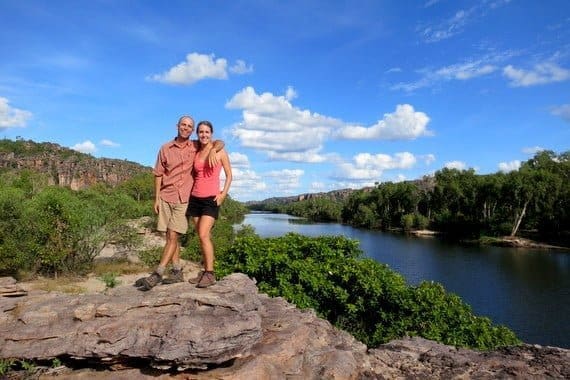
We stopped for lunch and took a boat up the Crocodile River, the border of Arnhem Land. This eastern section of the Top End is all Aboriginal territory and virtually closed to independent travelers. We cruised upstream escorted by our Wulna guide, learning about the Aboriginal traditions, including how to throw a spear wicked far.
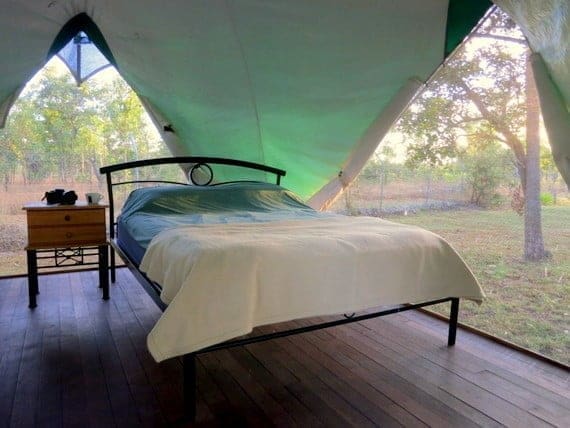
Adventure Tours has their own fixed private camps set up around the national parks, including a dining tent with full kitchen, proper bathrooms, and these lovely little screened-in cabins (not sure if these would keep the pythons or crocs out, but the mesh at least made us feel better).
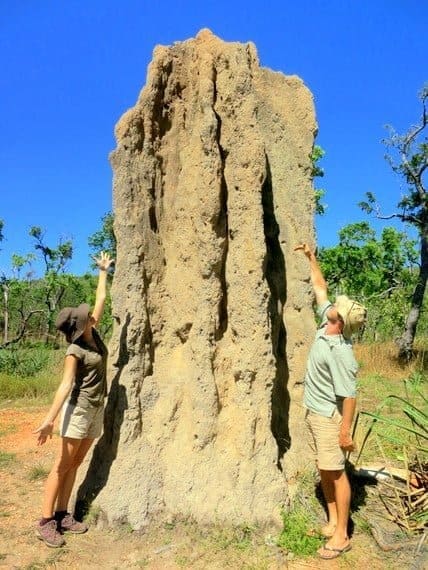
The next morning we set out for Kakadu National Park, stopping for water monitors, Rock-wallabies, and any other wonders our eagle-eye guide Luke would spot. A favorite detour was a 50-year-old, 15-foot-tall Cathedral Termite Mound. The construction of these natural skyscrapers with their walls of mud, plant, saliva, and feces is mind-boggling. The fact that they stand so tall and strong is largely from the brilliance of the complex social society of the termite, dividing labor among the worker, soldier, and reproducing mites to keep their world in check.
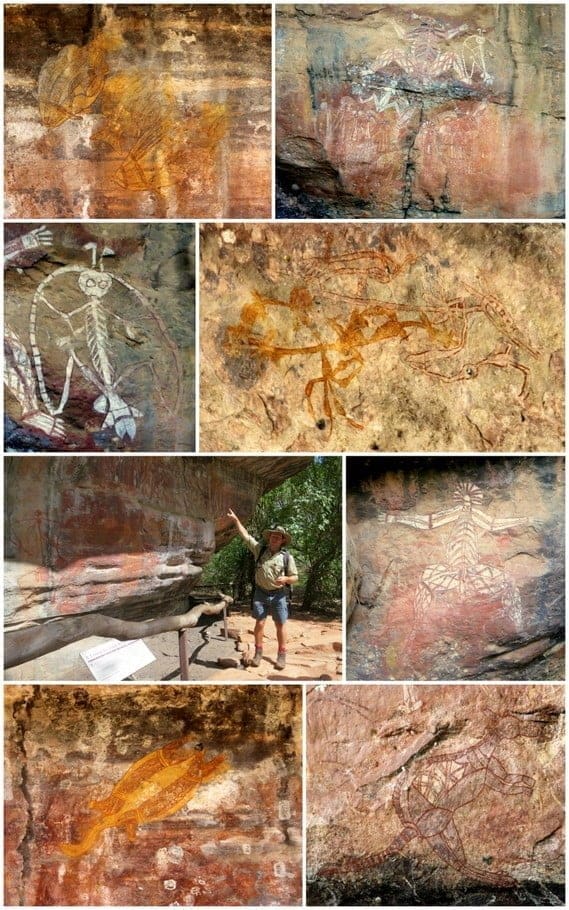
Kakadu and its surrounds have crazy landscapes, but when you get to Ubirr and soak in the ancient cave art, dating back 40,000 BC (yes, THAT old), you can see why UNESCO groupies swoon here. The Aboriginal people of Kakadu, Australia, are the oldest living culture on earth, and while these paintings date back an unfathomably long time, the local people regularly add to and update them, valuing this art as their archives. The Aboriginal languages were never written down, so their sacred texts of creation, law, and values are recorded on walls like these. We marveled at the rock art, then climbed the sandstone cliff shelters for incredible sunset views of the Nardab floodplain.
Note: Adventure Tours invited us to be their guests, but all opinions expressed are completely our own.

