
As a species, we have a problem. Bacteria are becoming more and more resistant to antibiotics. Makes sense: Antibiotics kill off all the bacteria they can, but the remaining ones that somehow survive continue to grow and spread. Guess which gene they all have in common? That’s right, the one that makes them resistant to antibiotics.
We’ve known this for years, but instead of accelerating, the work on new antibiotics is slowing down significantly. Why? Capitalism: It’s really expensive to develop new drugs, and once they’re developed, it’s hard to make a lot of money on them.
PhageLab wants to come to the rescue with a different approach: using a phage (short for “bacteriophage”). Phages are a type of virus that infects bacteria and kills them. Unlike traditional antibiotics, phages can be designed to target very specific bacteria, and that lets us use them to kill only the bacteria you don’t want (say, salmonella), while your gut bacteria stay more or less intact.
Of course, the process is not without downsides. One of the reasons broad-spectrum antibiotics work so well is that doctors often don’t know exactly which bacteria are wreaking havoc, and if you have a phage that attacks only a handful of bacteria, that could pose a challenge.
Still, I love phages in general, and the idea behind PhageLab is pretty rad. The team shared their pitch deck with me, so let’s see what the company showed investors to raise its $11 million Series A round.
We’re looking for more unique pitch decks to tear down, so if you want to submit your own, here’s how you can do that.
Slides in this deck
The page numbering on the deck is wonky (Page 1 is labeled 1, but page 3 is labeled 2) so keep in mind that when I refer to slide numbers in this teardown, I’m referring to the page number of the PDF, not what’s on the slides themselves. The final slide is page 26 of the PDF, but it is labeled 32, so it’s clear that some slides were deleted from the deck before PhageLab shared it with me. The company says the use of funds slide has been removed, but it’s not entirely clear what else was deleted.
Still, let’s review this deck as if this were the full story and see where that takes us.
- Cover slide
- Summary slide
- Problem slide
- Problem overview slide
- Problem impact slide I
- Problem context slide
- Problem summary slide
- Problem impact slide II
- Problem impact slide III
- Market size slide
- “This is how we do it” interstitial slide
- Value proposition slide
- “What are phages” slide
- Why now slide
- Solution slide I
- Solution slide II
- Field trial results slide
- “Meet our team” interstitial slide
- Team size slide
- Headquarters slide
- Team slide
- Summary slide
- Closing slide
- Contact slide
- Appendix interstitial slide
- Appendix: Videos slide
Three things to love
There’s some truly fantastic storytelling in this deck.
So what about big pharma?
Startups in this space always have to worry about the big pharma companies. They can definitely outspend you, so the question is how you’re going to outsmart them.
[Slide 6] Well that’s how you compete: They have given up. Image Credits: PhageLab
This slide goes a long way toward answering that: The business case for developing new antibiotics is plummeting, which opens the door for PhageLab.
That makes the urgency clear . . .
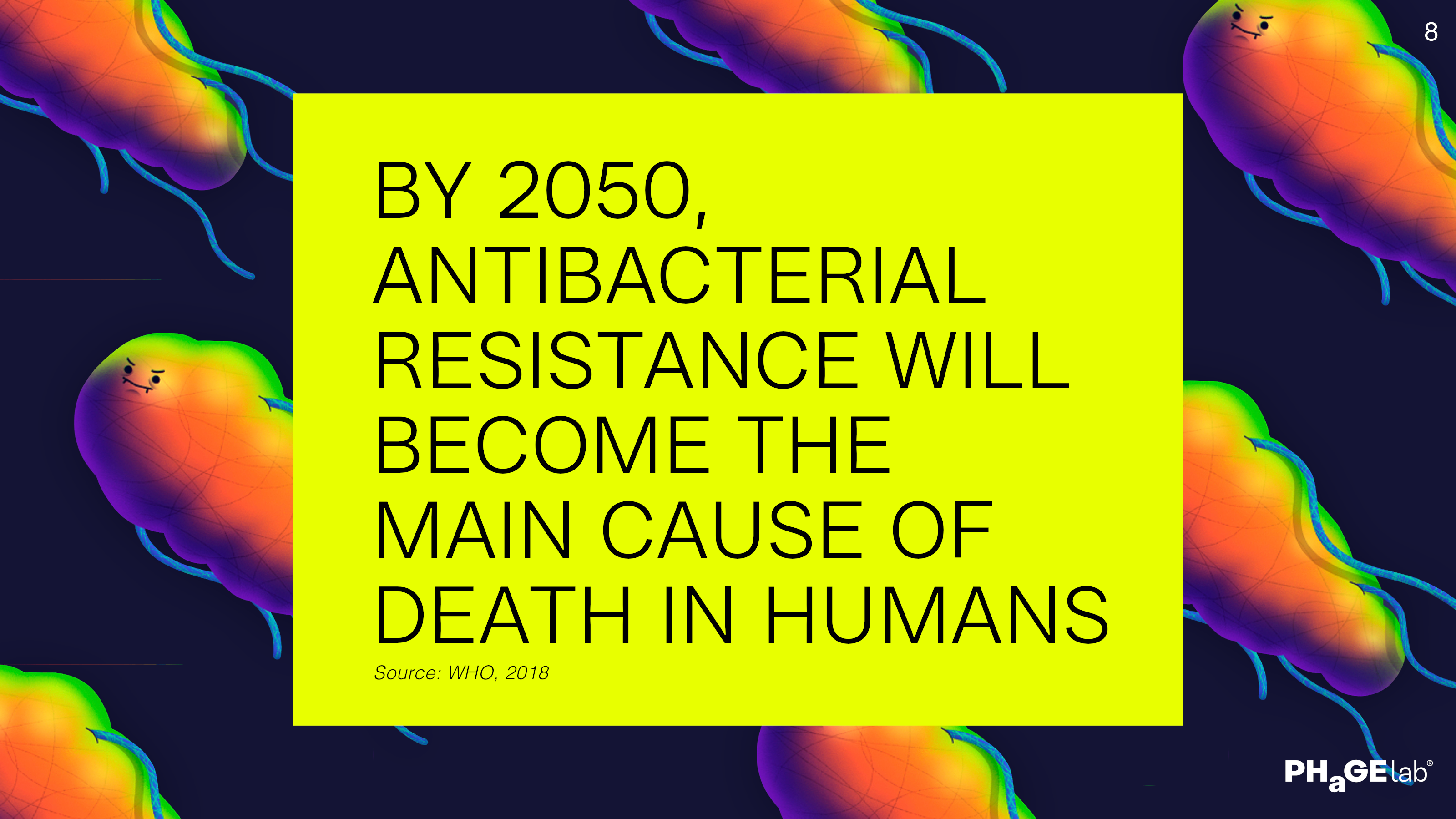
[Slide 9] Yeah, that’ll get their attention. Image Credits: PhageLab
I do have a thing or two to say about how the company outlines its problem statement, but slide 9 made me catch my breath. If we are 25 years away from this doomsday scenario, it’s obvious that there’s a huge opportunity for startups that can make a real impact in this space. It’s powerful storytelling.
That’s a hell of a promise of success
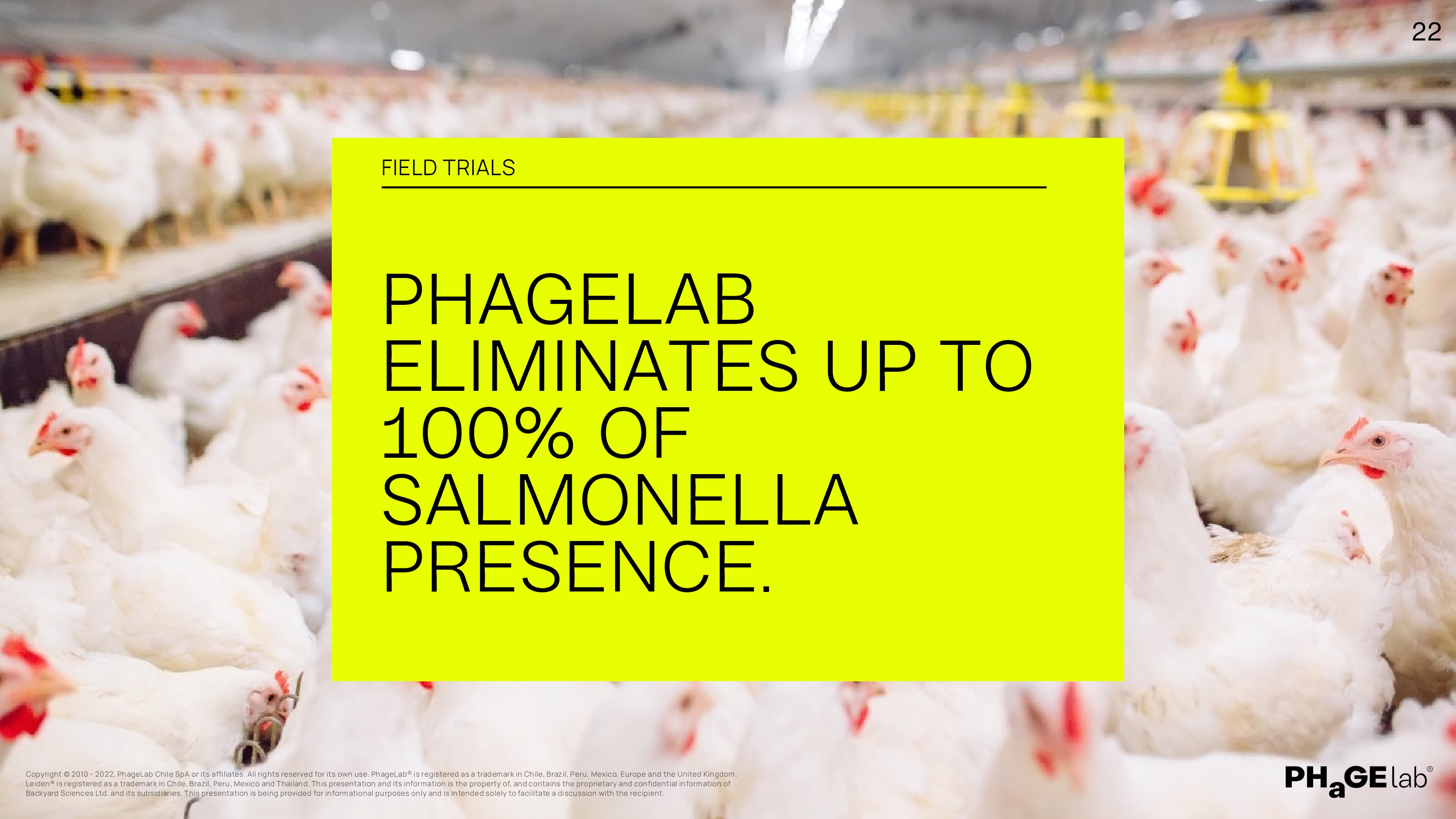
[Slide 17] So does it work? Image Credits: PhageLab
Bacteria are pretty nebulous, so where do you even begin? It seems to me like PhageLab asked itself: What’s a bacteria that everyone knows exists, knows where it exists, and is often in the media? Salmonella fits the bill nicely. The company has done its research and reckons it can remove salmonella altogether — a huge and obvious benefit for food supply chains.
In the rest of this teardown, we’ll take a look at three things PhageLab could have improved or done differently, along with its full pitch deck!

