
Staying safe and healthy while traveling is key to making the most of your trip. Unfortunately, one health risk often falls below travelers’ radar: Carbon monoxide.
This deadly gas can cause trouble both at home and abroad, and “very few people know about it,” says Chuck Heathco, founder of the John Wesley Heathco Legacy Foundation, which works to raise awareness of the dangers of CO. The organization is named after Heathco’s son, who, along with his girlfriend, passed away from acute carbon monoxide poisoning in 2023 at a luxury resort in Mexico.
Other families have suffered similar tragedies. In 2025, a 14-year-old boy died from carbon monoxide poisoning in a Costa Rican resort, and three American tourists were killed in a Belize hotel with a faulty water heater that same year.
The good news: There’s a simple step you can take to mitigate your risk.
Here’s everything you need to know about traveling with a carbon monoxide detector.
Why you shouldn’t leave this off your packing list
Often described as a silent killer, carbon monoxide is an odorless, colorless gas that can leach into indoor spaces from fuel-burning appliances like heaters, ovens, fireplaces and more.
Because the symptoms of carbon monoxide poisoning are easily confused with the flu or food poisoning, victims may not seek medical attention right away. And those who are affected while sleeping may not realize they have symptoms until it’s too late.
The consequences can be serious, Heathco says — even if they aren’t fatal.
“If you’re rushed to a hospital with carbon monoxide poisoning and you survive, there’s oftentimes damage done that’s irreparable.”

Reward your inbox with the TPG Daily newsletter
Join over 700,000 readers for breaking news, in-depth guides and exclusive deals from TPG’s experts
While travelers may assume hotels and resorts are monitoring for this unseen threat, regulations differ from state to state and country to country.
Thankfully, you can ensure you’re protected by adding a battery-powered carbon monoxide detector to your packing list. This small device can give you peace of mind while traveling and save your life in an emergency — and it takes up about as much space in your luggage as a smartphone.
How to know if you need a carbon monoxide detector

When should you pack a CO detector? The answer is: More often than you might think.
Many countries outside the U.S. have limited (or no) requirements regarding detectors in hotels or vacation homes. Those that do may not enforce them. For instance, the U.S. Embassy in Costa Rica notes that most countries in Latin America “do not have widespread laws mandating carbon monoxide detectors.”
Even at home, you might be surprised. According to Heathco, “only fourteen states have alarm mandates for hotels, VRBOs, etc. Thirty-six don’t.”
And even if these detectors are present, there’s no guarantee they will work 100% of the time.
Your best bet is to call your accommodation and ask if detectors are installed (in both rooms and public spaces) and if they are routinely tested and maintained. It’s also a good idea to research the hotel and the surrounding area for past carbon monoxide incidents.
When in doubt, pack your own portable CO detector. Heathco recommends keeping it in a plastic bag in your suitcase so you’ll never forget it.
“When you get home … leave it in the baggie, take the battery out and leave it in your suitcase. So you’ve already got it the next time.”
Using and maintaining your CO detector
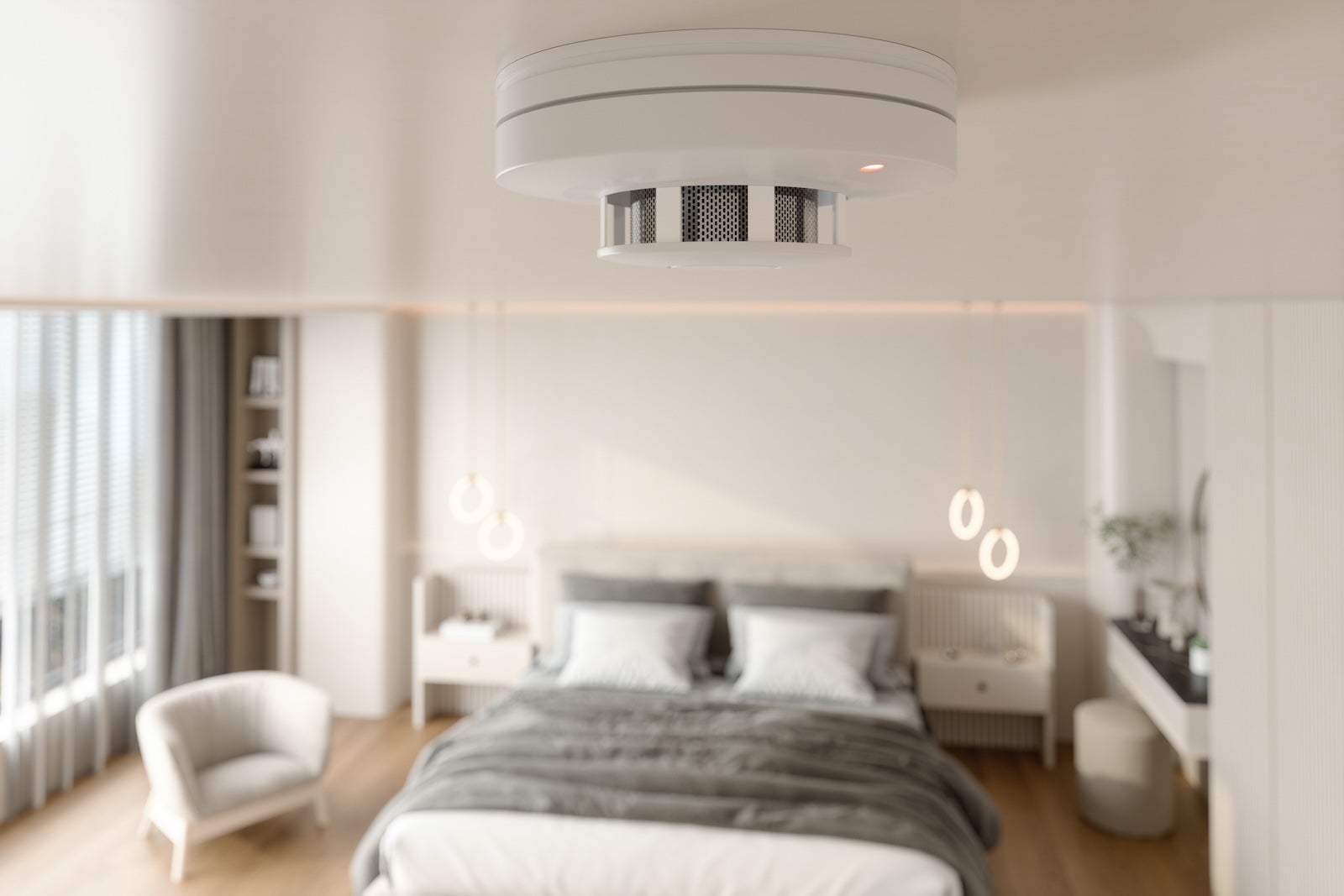
Upon arrival at your hotel, set up your detector in your sleeping area, away from vents, windows, ovens or fireplaces. Contrary to popular belief, detectors do not need to be placed near the floor.
According to First Alert, “Although there is a myth that carbon monoxide is heavier than air, it’s actually slightly lighter than air and it diffuses throughout the room/house evenly.”
Follow the manufacturer’s guidelines to keep your detector in good working order. This means testing it regularly, replacing the batteries as needed and replacing the detector itself at the end of its life (typically between 5 and 10 years). Many detectors will alert you when the batteries or the device itself need replacement.
What to do in an emergency
If your carbon monoxide alarm goes off, Heathco advises leaving the building immediately and alerting hotel management. You or hotel staff should call 911 (or the local emergency number) as well. It’s possible your room is not the only one affected, and other guests may be in danger. Acute exposure from a malfunctioning device could cause impairment within minutes, so it’s critical to act quickly.
But carbon monoxide poisoning can strike outside of your room. It could happen in a restaurant, a hotel common space or even an open-air boat.
In these scenarios, your best defense is to know the symptoms of carbon monoxide poisoning. Remember the acronym HEADS UP, which stands for the following:
- Headache
- Exhaustion
- Aching muscles
- Dizziness
- Sick stomach
- Unclear thinking
- Pale (or cool) skin
If you experience these symptoms, don’t assume you have the flu or food poisoning. Evacuate to fresh air. If carbon monoxide is the culprit, your symptoms will subside soon after you get outside.
“Carbon monoxide doesn’t stay in the body very long,” Heathco says. It has a roughly five-hour half-life, which is how long it takes to leave your system while you breathe normal air.
The best carbon monoxide detectors for travel
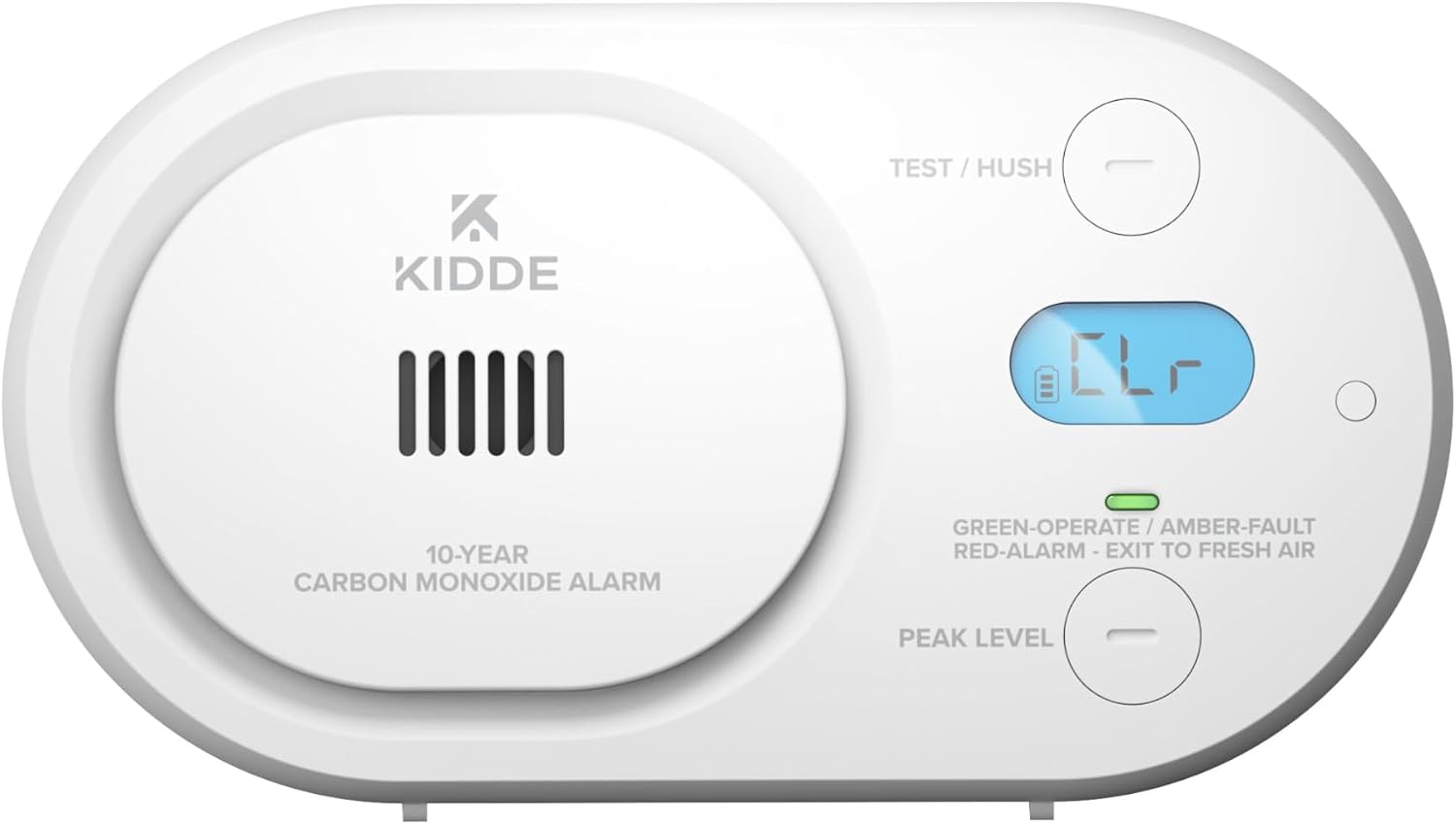
When it comes to travel, portability is a key concern. Choose a detector that is lightweight and small enough to fit in a suitcase or backpack — otherwise, you’re more likely to leave it at home.
Heathco recommends buying a detector that meets Underwriters Laboratory (UL) standards, meaning it has been rigorously tested for both accuracy and efficacy. Look for one that is battery-operated or plug-in with a backup battery, so you’ll be protected even during a power outage.
Here are a few solid options for your next trip.
- TPG staffers Lyndsey Matthews and Nick Ewen swear by this detector, which weighs in at under a pound.
- I just ordered two of these compact devices, one for myself and one for my parents, to test-drive at an upcoming family reunion.
- For something a little more high-tech, this smart alarm will send you real-time alerts to an app on your phone.
- This option is great if you travel with pets or high-risk individuals — including young children, elderly adults, pregnant women or those with compromised heart or lung health. It will alert you to lower carbon monoxide levels, which may be safe for the average adult but can affect sensitive individuals and pets.
Bottom line
One of the many joys of traveling is leaving your day-to-day responsibilities behind — but things can still go wrong while you’re on vacation. You should still be alert to health and safety risks such as illness, petty theft and carbon monoxide poisoning.
Thankfully, you can minimize your risks of CO poisoning with one simple precaution: packing a portable CO detector. They’re inexpensive and easy to travel with — and could wind up saving your life.
“Whenever you travel, just stick that alarm in your suitcase,” urges Heathco. “It’s so easy.”
Doing so won’t bring back his son, but Heathco is honoring Johnny’s legacy by pushing for an end to these preventable deaths with educational and public policy efforts. And with a simple purchase, you can help.

