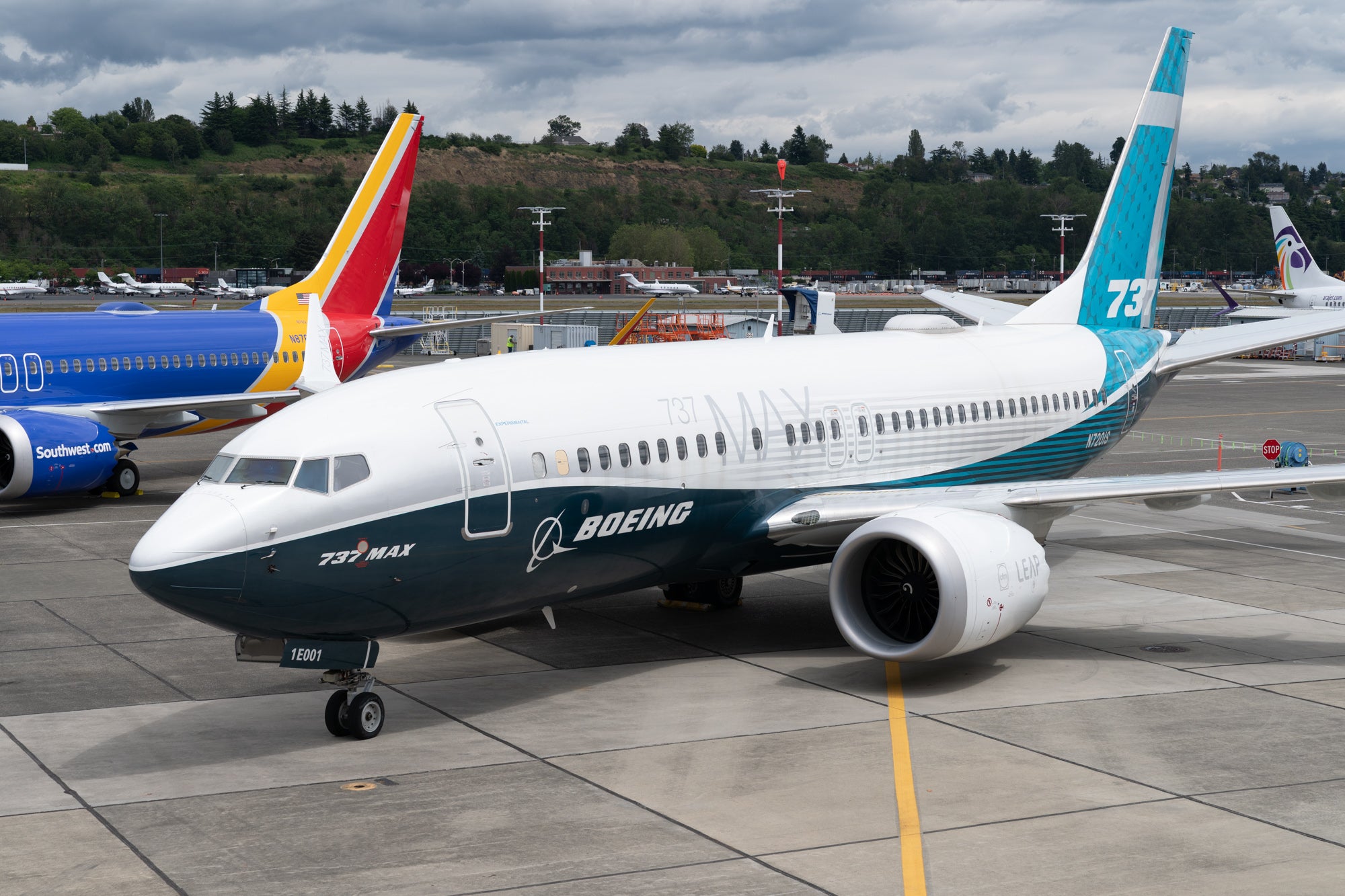
The Federal Aviation Administration granted certification to Boeing’s smallest passenger jet on Monday, a major milestone for the planemaker that comes after more than four years of delays.
The 737 MAX 7 is the shortest variant of Boeing’s workhorse narrow-body jet, capable of carrying between 135 and 160 passengers in a normal commercial configuration. (It can seat up to 172 people in a high-density setting.)
However, it has the longest range in the 737 MAX family: up to 4,300 miles. Coupled with a relatively low per-seat operating cost thanks to the plane’s efficient engines, this can allow airlines to use the jet on longer, “thinner” routes that lack sufficient demand to support a larger wide-body plane.
Dallas-based carrier Southwest Airlines is slated to be the launch customer for the MAX 7. In a statement, Boeing said that the planemaker and airline are “preparing for delivery of the first airplane.”
A spokesperson for Southwest said the airline plans to begin flying passengers on the MAX 7 three to six months after delivery of the first jet, and that its current schedule — published through March 2027 — does not include any routes or frequencies using the plane, although that can always be amended. Still, the airline had not factored the MAX 7 into any of its plans for 2026.
“Southwest Airlines is pleased with the FAA’s certification of the Boeing 737-7 aircraft and we look forward to the plane entering service in the coming months,” Southwest said in a statement to TPG. “Certification is an important step toward continuing to modernize our all-Boeing 737 fleet with upgraded interiors and more fuel-efficient aircraft to fit our Customers’ preferences and demand patterns.”

Reward your inbox with the TPG Daily newsletter
Join over 700,000 readers for breaking news, in-depth guides and exclusive deals from TPG’s experts
Airlines had initially expected the MAX 7, as well as the MAX 10 (the largest version in the narrow-body family), to become available shortly after the MAX 8 and MAX 9. However, after those mid-sized variants were grounded following two crashes before the coronavirus pandemic, certification of the MAX 7 and 10 was delayed. While the planes appeared to be on track for certification by the end of 2022, new requirements for all newly certified jets caused the delays to continue. The FAA described the delays in a statement as being linked to “complex technical issues” and a review of the airplane’s design and safety testing.
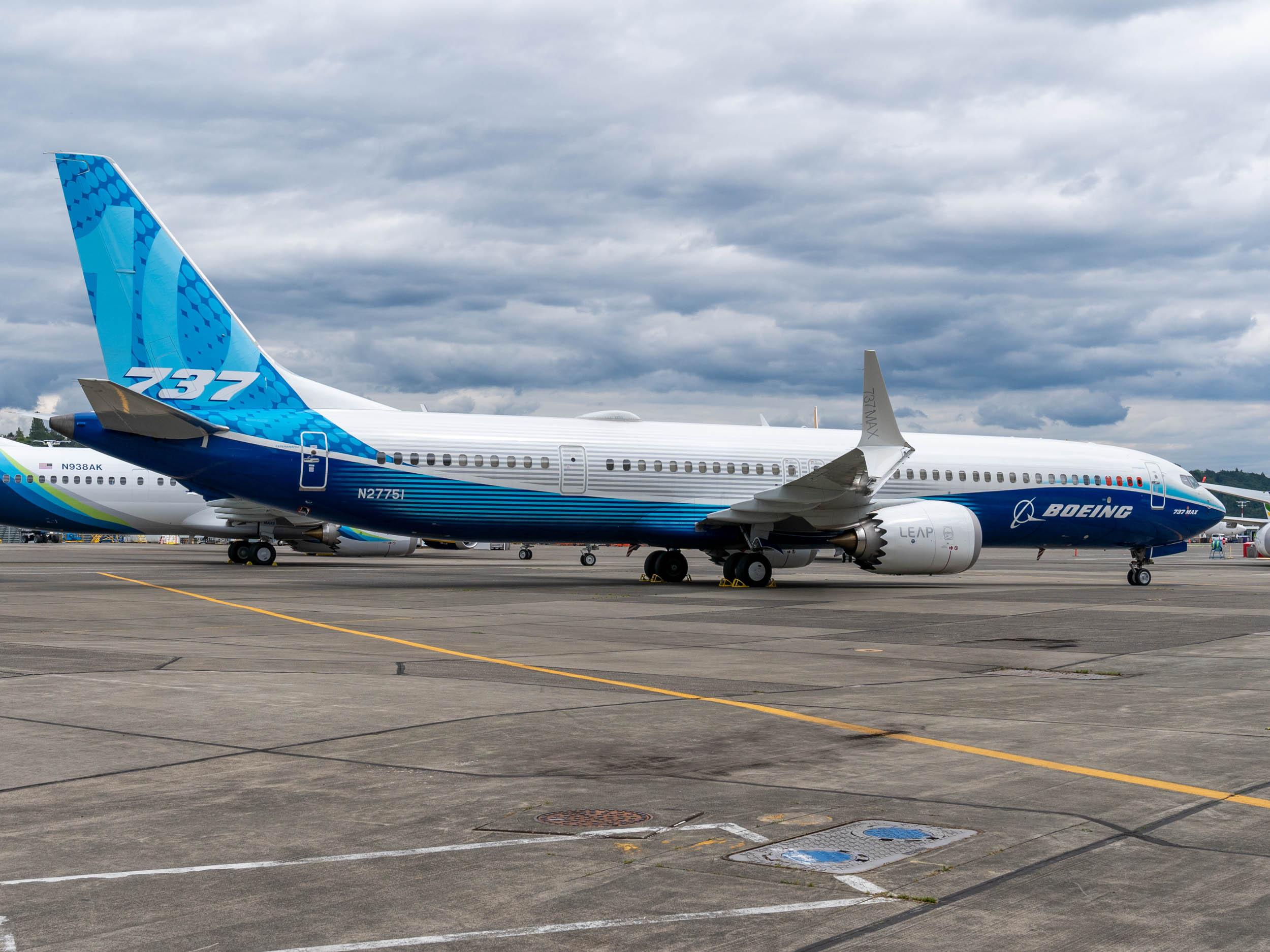
“Before granting approval, the FAA required the MAX 7 to incorporate key improvements, including updates to the flight-control software, flightcrew alerting system, and a redesigned engine anti-ice system,” the FAA said.
Certification of the MAX 10 is widely expected in the coming weeks or months, since the jet largely features the same adjustments as the MAX 7.
Boeing has already built around 30 MAX 7s and nine MAX 10s, Reuters noted.
Related reading:

