We independently select these products—if you buy from one of our links, we may earn a commission. All prices were accurate at the time of publishing.
Ah, the first signs of fall: There’s a crisp feeling in the air, a strong desire to go back-to-school shopping, and most importantly — it’s the start of apple season. Whether you find yourself at an orchard ready to pick a few freshly grown fruits or are shopping for the perfect variety to make apple pie, consider this your comprehensive guide. Here is everything you need to know about the sweetest apple varieties as well as the delightfully tart ones.
A Guide to Apples From Tart to Sweet
Granny Smiths are the most tart variety of apple and are indeed named after a real, live granny (in this case, their first propagator Granny Maria Ann Smith). First grown in Australia in the late 1800s, Granny Smith apples are known for their vibrant green color, firm, juicy texture, and strong, tangy flavor. They work well when sliced thin and added to sandwiches or salads but truly shine in baking recipes, where their substantial texture prevents them from becoming overly soft or mushy after cooking.
Far sweeter than the Granny Smith but still tangy, the highly-popular McIntosh are identified by their red-green color pattern, small-to-medium size, and soft, juicy texture. McIntosh apples, which were originally grown in Canada and still serve as the country’s national apple, don’t hold up well to baking but are well-suited for cider, juice, apple sauce or just enjoying fresh from the tree.
Pink Lady apples are known for their blush color, firm texture, and tart-sweet, juicy flavor. They were first grown in 1973 by Western Australian researcher John Cripps, who discovered the flavor by crossing Golden Delicious and Lady Williams apple varieties. Having landed in the US in the 1990s, Pink Lady Apples are a relatively new apple for American consumers and are popularly enjoyed in snacks and salads as well as in pies.
SweeTangos are the product of crossing Zester and Honeycrisp varieties. They burst onto the scene in 2009 and are known for their red-blush color, mixture of sweet, spicy, and acidic flavors and firm, crunchy texture. SweeTango apples are best enjoyed as snacks but can also be incorporated into baking and cooking recipes.
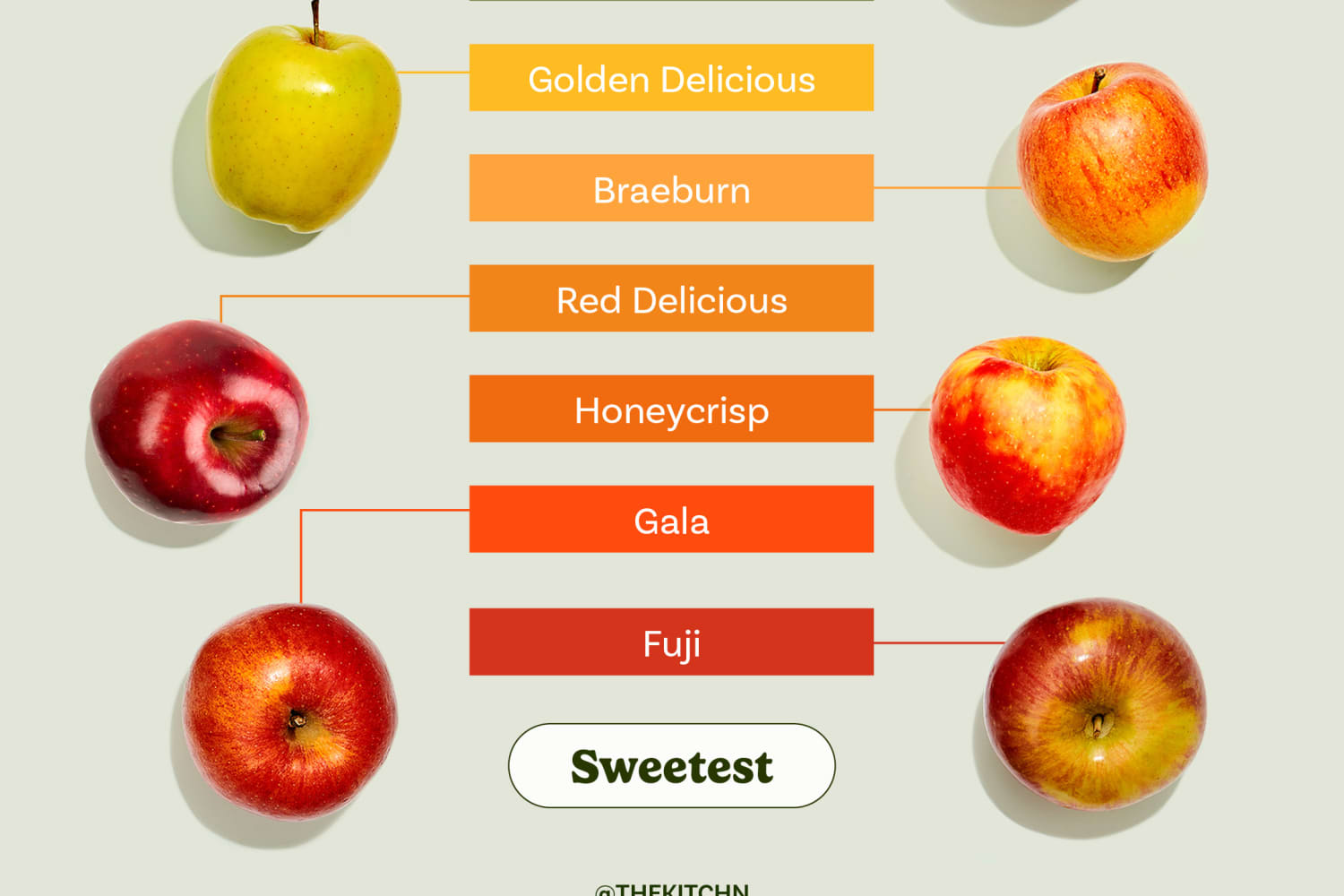
Golden Delicious were originally discovered in West Virginia around the early 1900s and are identified by their bright yellow-green color, thin skin, mellow flavor, and firm texture. Golden Delicious apples hold up well for both raw snacking or baking.
Braeburn apples were first grown in New Zealand in the 1950s and are easily identified by their tie-dye blend of red, yellow, orange, and green colors, nutmeg and cinnamon-adjacent flavor, golden interior, and firm texture. Braeburns can be enjoyed raw in sandwiches, salads and snacking as well as in baked dishes like apple pie.
Honeycrisp apples were developed in the 1960s at the University of Minnesota and are engineered to have a juicier bite. They are also known for their bright red-yellow color, tart-sweet flavor, and creamy-yet-crunchy texture. They work well as a raw snack, juiced, or in baked dishes like apple pie.
Fuji apples are named after their origin city, Fujisaki, Japan, and were first grown in the 1930s as a hybrid between the Red Delicious and Virginia Ralls Janet varieties. Now one of the US’s most popular varieties, Fuji apples are identified by their red-yellow coloring, firm texture, and deeply sweet flavor that resembles the taste of apple juice. Fuji apples are hearty and store well, making them a good fit for snacking, applesauce, and baking alike.
