Travelers passing through security at one of America’s busiest airports may notice a new, high-tech setup.
In recent weeks, the Transportation Security Administration quietly unveiled new “e-gates” at Charlotte Douglas International Airport (CLT).
If you’ve traveled internationally, the setup may feel similar to what you’ve seen in other parts of the world.
But it’s a first-of-its-kind setup for TSA — one that will see travelers spend a lot less time face-to-face with officers before a flight.
How the TSA’s new e-gates work
The TSA’s new e-gates in Charlotte are part of an ongoing trial to test, essentially, how well the setup actually works at airports.
The agency has been planning out this concept in a lab — and now wants to see how it goes in a real-life environment.
No need to hand your ID to the TSA officer
The new tech automates the part of the process where you walk up to the TSA officer and hand them your ID.
In these higher-tech lanes, instead of handing over your driver’s license, you’d scan it at the new checkpoint gate yourself (as always, you can also use a passport or other acceptable form of ID).
Then, you’d get your photo taken — just like you would at a typical checkpoint lane — which the TSA compares with the photo on the ID you scanned.
Reward your inbox with the TPG Daily newsletter
Join over 700,000 readers for breaking news, in-depth guides and exclusive deals from TPG’s experts
And from there, assuming everything checks out, you’d proceed to the screening stage like normal.
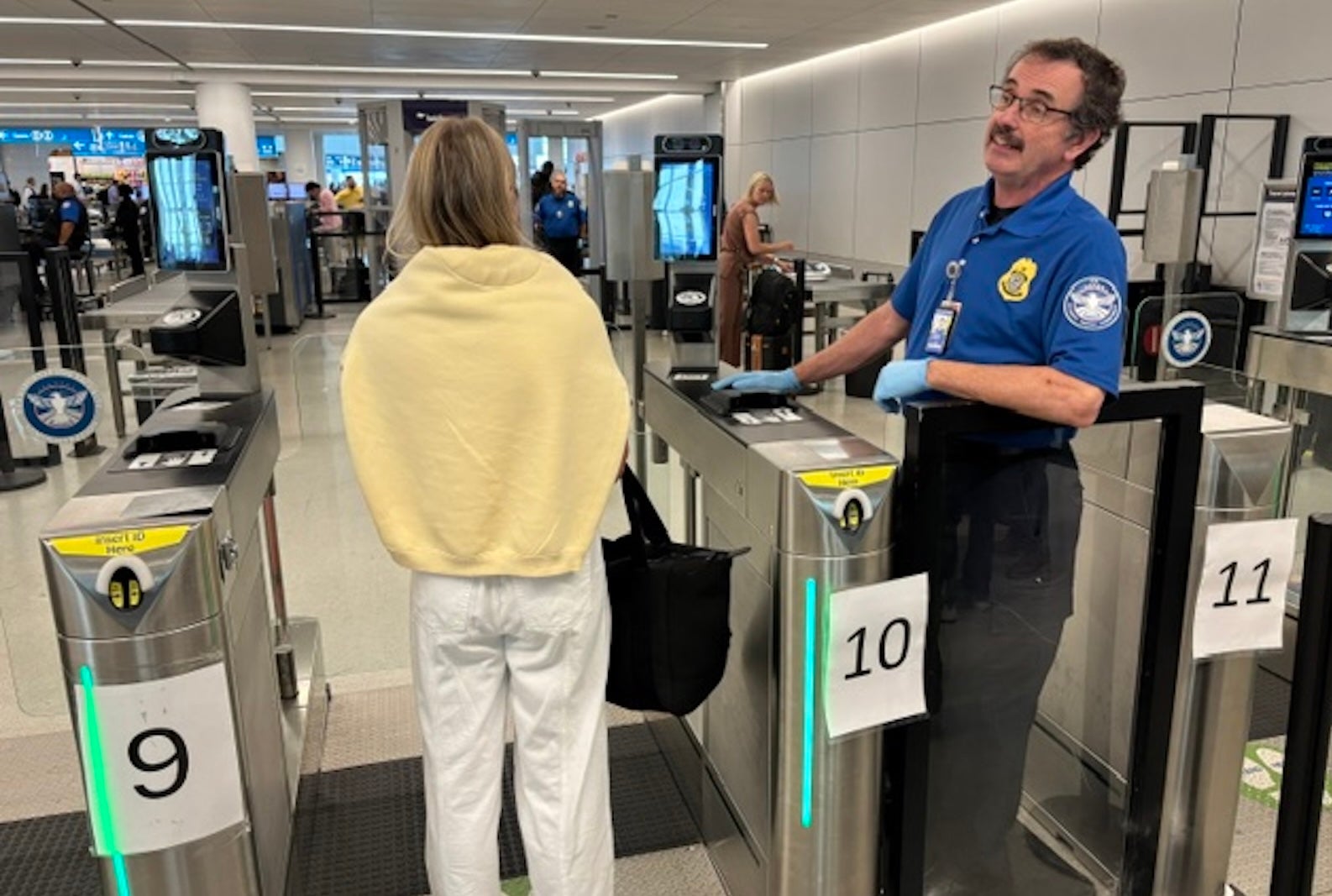
Officers remain on hand in the automated lanes to ensure only cleared passengers move past the gates.
8 lanes live today at CLT
As part of this “operational assessment” the TSA is doing, these new e-gates are currently live in eight TSA PreCheck lanes at CLT, which is the first airport nationally to trial the setup.
It’s not yet clear when — or if — travelers could see the e-gates at more airports in the future.
Will TSA e-gates be faster?
Will the TSA’s new e-gates meaningfully reduce security wait times? Time will tell.
In my experience at international airports, automated lanes — whether it’s for security or at customs — can be smooth-sailing when everything goes well. But it can also lead to frustrating backups when snafus pop up.
So far in Charlotte, the TSA’s new setup has so far saved travelers, on average, about three seconds, an agency spokesperson confirmed (modest, but that’s five minutes of saved time every 100 passengers).
But the agency said it’s hopeful the “self-service nature” of the new e-gates could free up officers to help with other security duties — which could help the TSA checkpoint run more efficiently overall.
Worth noting: Automation like this would have certainly been hand during this past spring’s partial government shutdown, when TSA workers weren’t getting paid — leading to skyrocketing call-outs and wait times.
Bottom line
The debut of these new TSA e-gates come as the agency is quickly rolling out more robust tech to airports across the country.
In recent months, the agency dramatically expanded its ultrafast TSA PreCheck Touchless ID lanes, which are one of the best ways to shortcut security lines — without having to pull out your ID or boarding pass.
Related reading:

