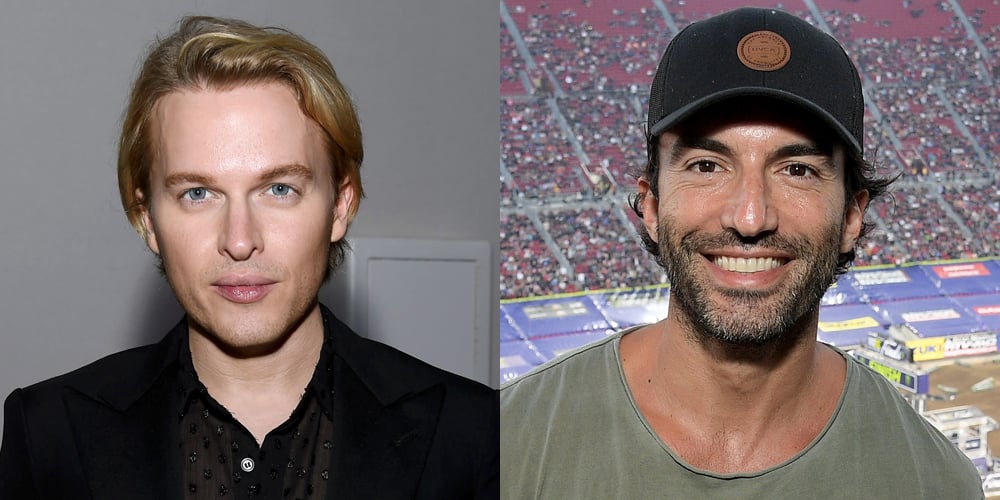
Ronan Farrow is responding to the Internet rumor that he was involved in helping the New York Times‘ reporting on Blake Lively‘s allegations against Justin Baldoni.
Late last year, the news outlet published a story after Blake filed a legal complaint against her 40-year-old It Ends With Us co-star/director, accusing him sexual harassment and starting a smear campaign.
Justin filed a $250 million libel lawsuit against the Times, claiming the paper “‘cherry-picked’ and altered communications stripped of necessary context and deliberately spliced to mislead.”
So, how does Ronan factor in? A rumor emerged and spread on social media that Ronan was involved due to his rumored connection to Taylor Swift, who is friends with Blake.
Ronan issued a lengthy statement online.
Keep reading to find out more…
An Instagram commenter asked why he’d assisted in “taking down” Justin, to which Ronan replied and corrected them: “No—I don’t write for the New York Times, and have nothing to do with their coverage of that case, even informally or behind the scenes. I write for The New Yorker (a completely different outlet), and if I ever were to look into this, you’d see my work there. There’s a lot of disinformation out there—please always try to think independently and check what you’re hearing online.”
He then followed up with a lengthier comment.

He wrote, “My practice is to not give oxygen to attacks that are a *complete* fabrication being pushed in bad faith, but since you engaged thoughtfully: what you describe as “so many connections” is me being seen at drinks with an old friend [allegedly Taylor Swift], with whom I have never discussed this matter. I’ve been on the receiving end of many attack campaigns like this, and when the level of disregard for the facts is this intense—claims about me being the most powerful journalist at an outlet with which I have no contact, or the architect of a story I’ve not touched—my experience is often that those who have bought in are already so uncritically eager for easy outlet for outrage that they have little interest in factual correctives. But, for what it’s worth, even the ideological framework animating this one is suspect—I’m a nonpartisan journalist, not an activist, and my reporting on sex crimes (a narrow band of my work) has been about serious cases of violent misconduct or systemic cover-ups. My work has dismantled power structures, often liberal ones (in, for example, Hollywood), but this is never what motivates me. I look at the facts. You can criticize the work but aim is not about culture war, it’s about scoops (that hopefully reveal something useful about the world).”
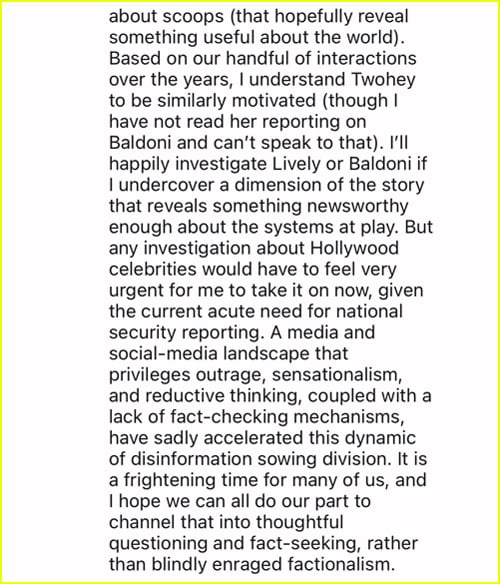
The comment continued, “Based on our handful of interactions over the years, I understand Twohey to be similarly motivated (though I have not read her reporting on Baldoni and can’t speak to that). I’ll happily investigate Lively or Baldoni if I undercover a dimension of the story that reveals something newsworthy enough about the systems at play. But any investigation about Hollywood celebrities would have to feel very urgent for me to take it on now, given the current acute need for national security reporting. A media and social-media landscape that privileges outrage, sensationalism, and reductive thinking, coupled with a lack of fact-checking mechanisms, have sadly accelerated this dynamic of disinformation sowing division. It is a frightening time for many of us, and I hope we can all do our part to channel that into thoughtful questioning and fact-seeking, rather than blindly enraged factionalism.”

